

Blog

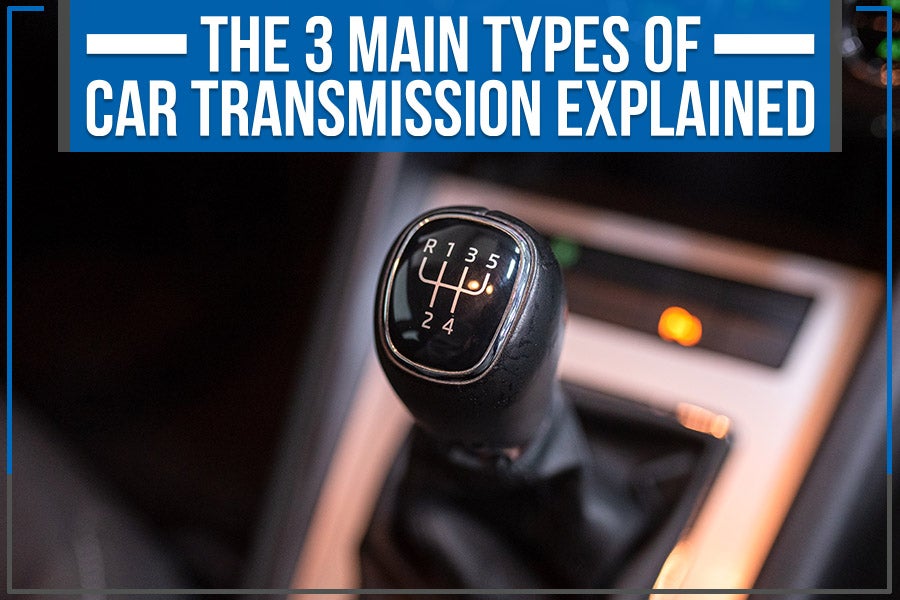
The 3 Main Types of Car Transmission Explained

The 3 Main Types of Car Transmission Explained

If you’re a car lover, or even just someone who needs to get around town, you’ve probably heard of different types of car transmission. But what do they all mean? And which one is right for you? 

In this post, car experts from Acura of Tempe will break down the three main types of transmissions: automatic, manual, and CVT. We’ll generally skim through the pros and cons of each type, so you can choose the one that’s best for your needs. 

So, buckle up, and let’s get started!

  1. Manual Transmission

Since a manual car is one that you have to shift gears to change the speed of your car, it’s clear this type of transmission requires more driver involvement. The best thing about having a manual transmission is that you get to control the car’s speed with your own two hands. In this way, manual cars are great for constantly-changing driving conditions or if you need to make a sudden stop.

On the contrary, manual transmissions can be tough to use in heavy traffic, and parking can be a nightmare! Also, failure of a few gears could mean that your car won’t move at all–and that’s definitely not safe.  

  1. Automatic Transmission

The automatic transmission is among the most popular car transmissions. Automatic Transmissions use computerized electronic sensors and hydraulics systems to shift gears smoothly, and at the right time, so you don’t have to worry about it. The best part about an automatic car transmission? You don’t have to do anything! Your car will automatically shift from low gear for getting off the line quickly or high gear for cruising on the freeway.

Although the biggest drawback of an automatic car transmission is that it can’t be manually shifted like a manual transmission. Plus, automatic car transmissions are not as fuel-efficient as manual or semi-automatic cars. Because they use energy, converting their power from gasoline to mechanical energy when shifting gears.

  1. CVT Transmission

The 3rd one on our list is the CVT transmission (continuously variable transmission). Typically found on hybrids, the CVT offers a smooth ride thanks to its ability to adjust automatically between gears, speeding up and slowing down the car depending on your speed and acceleration preferences.

So, what’s good about this type of car transmission? What’s bad? One major pro of this type of transmission is that it conserves gas. So, suppose you’re someone who cares about their carbon footprint or is just conscious about saving money at the pump. In that case, this could be an excellent choice for you! the drawback of CVT is that it has a reputation for being loud when in use. It can also cause vibrations which are annoying at times.

The Gist

Well, now you know that there are three main types of car transmissions, and each one has its own pros and cons. Read over the information we’ve provided to know which type you have in your vehicle.

 If you need help deciding what to do next with your transmission or if you’re looking for a transmission expert in Tempe, AZ, give our team a call at Acura of Tempe for more details on how we can best serve your needs. 

Want to schedule a service or repair online? Click here!
Recommended Posts

Navigating Electrical Issues at Your Acura Dealership

Modern vehicles depend on electricity to a greater degree than ever before. Electricity powers almost all of your Acura’s essential systems, which means electrical problems have a major impact on your car’s performance. Fortunately, your Acura dealer has the trained technicians and technology to repair any of these problems. These are a few of the issues that we can fix for you. Navigating Electrical Problems at Your Acura Dealer Battery Overcharging The battery is vital to supplying the electrical charge that causes your engine to crank and then start as the combustion process takes over to power your car. This electrical charge uses a significant portion of your battery’s reserves. The alternator will replenish this power, as it begins recharging the battery as soon as your engine is running. The alternator’s voltage regulator controls the power supply to the battery. The regulator supplies full power to the battery for ten minutes and then switches to recharging at a reduced rate. If the regulator fails, the alternator will charge the battery at full power, and this can destroy the battery by causing the electrolyte solution inside it to boil. We’ll examine your alternator and either replace the regulator or install a new alternator, depending on the level of damage. Failed Rectifier An alternator uses a complex process to produce electricity for your car’s systems. The crankshaft turns as you drive, producing mechanical energy to power the alternator. This energy causes the alternator to spin at high speed and generate magnetic energy. The magnetic energy is captured by the stator and converted to AC. The final step in the process involves the alternator’s rectifier converting AC to DC for your car’s systems. If the rectifier fails, the alternator will continue to generate AC, which is useless for your car’s systems. Since the alternator isn’t supplying usable power, the electrical systems will draw on the battery for DC. A battery can’t power all your car’s systems indefinitely. It will drain completely in less than an hour. Your Acura dealer can replace the rectifier to fix this problem. Damaged Battery We’ve seen how an alternator can damage the battery, but the reverse is also true. If your battery has been damaged, for example by extreme weather or an electrical fault, it can easily cause even a healthy alternator to fail. This may seem strange, but the alternator can fail if the battery forces it to continue recharging at full power. The voltage regulator switches to a reduced recharging rate, as we saw above. This reduction occurs once the alternator receives confirmation that the initial charge has been received. A damaged battery won’t send this signal, and the alternator will continue to spin faster to supply power until it wears itself out. The battery will also suffer severe structural damage and fail. We’ll need to replace your battery and may also need to replace the alternator if it’s been damaged. Starting Problems One of the most common electrical problems is starting difficulties. Starting your engine involves three major electrical components: the battery, starter, and alternator. The battery supplies the initial electrical charge to the starter motor, and the starter initiates the cranking process that brings your engine to life. The alternator then begins recharging your battery. You can identify the possible cause of the problem by listening for a slight click when you press the start button. This click is made by the starter. If you don’t hear a click, the starter is the cause of the problem. If you hear a click, your battery may have worn out and can’t retain enough electricity to power the starter. The other possibility is that the alternator is failing and isn’t recharging the battery sufficiently. Our technicians will need to investigate and repair or replace the damaged component. Electrical Glitches Electricity can be fickle, and it’s possible for a minor electrical issue, like a power window that won’t open, to occur for no apparent reason. These issues are more common in older vehicles due to worn wiring and other issues. If a minor issue like this appears and doesn’t repeat itself, there’s usually no cause for concern. If minor electrical problems appear more frequently, your alternator could be failing. The alternator’s job is to produce electricity for your car’s systems. As it ages, the alternator will produce less electricity. When the alternator can’t supply enough power for all your car’s systems, electrical glitches will become more frequent as the alternator struggles to generate enough power. The technicians at your Acura dealer will test the alternator and install a new one if the original is failing. Damaged Sensors Your Acura contains numerous sensors that connect to your car’s computer. The sensors receive instructions from your computer and also supply it with information on the health and status of the components they connect to. These sensors help to automate many processes in the engine and other systems to make your time behind the wheel easier and more enjoyable. Sensors can eventually fail, and this can lead to further mechanical or electrical problems. If the sensors don’t supply your computer with the information it needs, the computer has to guess what decision to make. A failed oxygen sensor, for example, can cause your engine to become fuel-rich, as your computer won’t know the amount of air your engine needs to work efficiently. We’ll examine the sensors and replace any damaged ones. Worn Wiring Your Acura contains a large amount of wiring to supply power from the alternator to every system that needs it. These wires carry electricity continuously, and the flow of electricity causes the wiring to heat up. This is normal, but over time, the constant flow of electricity takes its toll on the wiring and can cause it to fray or break. Broken wiring will cause systems or devices to shut down as they lose access to electricity. Your battery warning light will illuminate as a warning from the computer that something is wrong. We can test the wiring and replace any damaged sections. If you’re experiencing problems with your car’s electrical system, contact us immediately at Acura of Tempe in Tempe, AZ. As your trusted Acura dealer, we can repair any problem for you in no time.

Dealing with Dashboard Warning Lights: What They Mean and How to Respond

Key Takeaways: Dashboard warning lights are crucial for vehicle health and safety. Responding promptly to these lights prevents significant issues. Regular car maintenance is essential for avoiding warning light triggers. Addressing lights like the engine, brake system, and oil pressure is vital. Professional assistance is recommended for complex issues. Navigating the world of dashboard warning lights can be a daunting task. These lights are pivotal in understanding your vehicle’s health and ensuring your safety on the road. Our guide will help you decipher these lights and take appropriate action. Need immediate assistance? Acura of Tempe specializes in dealing with dashboard warning lights. Introduction to Dashboard Warning Lights Dashboard warning lights are your car’s way of communicating vital information about its condition. Each light serves a specific purpose, from engine indicators to oil pressure warnings. Ignoring these signals can lead to serious car maintenance issues or jeopardize vehicle safety. Engine Indicator The engine indicator light, often symbolized by an engine outline, is one of the most common dashboard warning lights. This light illuminates when there’s a potential issue with your vehicle’s engine. It could range from minor problems, like a loose gas cap, to more major issues, like a malfunctioning catalytic converter. Timely attention to this light is crucial for your car’s longevity and performance. Brake System Alert Your vehicle’s braking system is fundamental to your safety. The brake system alert, typically represented by an exclamation mark within a circle, indicates issues within the braking system. This could include low brake fluid levels or an anti-lock braking system (ABS) malfunction. Addressing this dashboard warning light promptly ensures your vehicle remains safe and reliable. Oil Pressure Warning The oil pressure warning light, usually depicted as an old-style oil can, is another crucial dashboard indicator. It illuminates when there’s a drop in the engine’s oil pressure, which is essential for lubricating engine parts. Neglecting this light can lead to significant engine damage, emphasizing the importance of car maintenance. Temperature Warning Overheating can severely damage your engine. The temperature warning light, often shown as a thermometer or a wave-like symbol, alerts you when your engine’s temperature exceeds the normal range. This could be due to a malfunctioning radiator, a broken water pump, or low coolant levels. Immediate action is required to prevent potential engine damage and maintain vehicle safety. Airbag Indicator The airbag indicator light, usually displayed as a seated figure with a circle in front, is a critical dashboard warning light for vehicle safety. If this light stays on, it indicates a problem with the airbag system, which could mean airbags might not work in case of an accident. Regular checks and prompt responses to this warning are essential for ensuring the safety of all passengers. Electrical System Alert Your car’s electrical system powers various components, from headlights to the radio. The electrical system alert, often symbolized by a battery, signifies car charging issues. It could be due to a failing alternator, a weak battery, or faulty wiring. Addressing this dashboard warning light is crucial for the smooth functioning of your vehicle. Tire Pressure Monitoring System (TPMS) Proper tire pressure is essential for safety, fuel efficiency, and prolonging tire life. The Tire Pressure Monitoring System (TPMS) light, typically displayed as an exclamation mark inside a flat tire symbol, alerts you when tire pressure is too low or too high. Regularly checking and adjusting tire pressure per this warning light helps maintain optimal vehicle performance and safety. Dashboard Warning Lights Regular vehicle maintenance is key to preventing dashboard warning lights from turning on. Here’s a quick checklist: Regularly check engine oil levels and quality. Ensure the braking system, including brake pads and fluid, is in good condition. Monitor coolant levels to prevent engine overheating. Pay attention to tire pressure and tread wear. Have the electrical system, including the battery and alternator, checked periodically. Fuel System Indicator The fuel system indicator, often represented by a gas pump symbol, is vital for monitoring your vehicle’s fuel efficiency. When this light comes on, it could indicate a problem with the fuel system, such as a clogged fuel filter, a malfunctioning fuel pump, or issues with the fuel injection system. These problems can affect your car’s performance, fuel consumption, and emissions. Regular fuel system checks are essential for ensuring optimal engine performance and maintaining efficient fuel usage. Battery Charge Warning The battery charge warning light, typically displayed as a battery symbol, is crucial for your car’s electrical system. This light illuminates when there’s a charging system failure, often due to a failing alternator or a dying battery. Since the battery powers crucial components like the ignition and lights, addressing this issue immediately is essential for avoiding breakdowns and maintaining vehicle safety. Service Vehicle Soon The ‘Service Vehicle Soon’ light is a general alert indicating that your vehicle requires professional attention. It could be triggered by minor issues like sensor malfunctions or more severe concerns requiring immediate attention. Regular service checks can prevent this light from coming on and extend your vehicle’s lifespan, ensuring it remains reliable for years. Transmission Temperature The transmission temperature warning light, indicated by a gear symbol with a thermometer, is critical for maintaining your vehicle’s transmission health. This light warns of an overheating transmission, which can occur due to low transmission fluid levels or a failing transmission cooler. Since the transmission is key to vehicle mobility, addressing this warning promptly is vital for avoiding costly repairs and ensuring smooth driving. Traction Control System The traction control system light, often symbolized by a car with skid marks, plays a significant role in vehicle safety, especially in adverse driving conditions. It illuminates when there’s a problem with the system that helps prevent wheel slip during acceleration. This system is crucial for maintaining control of slippery roads. Ensuring it’s functioning correctly is essential for safe driving in challenging conditions. Check Suspension System The suspension system light, usually indicated by a car with two wavy lines underneath, highlights issues with your vehicle’s suspension system. This system is crucial for providing a smooth ride and stable handling. Problems indicated by this light can range from worn shocks or struts to more complex issues with the electronic suspension system. Regular maintenance of the suspension system ensures comfortable and safe driving experiences. Conclusion Understanding and responding to dashboard warning lights is crucial for your vehicle’s health and safety. Regular maintenance and prompt attention to these warnings can prevent severe issues and keep your car running smoothly. For expert assistance and peace of mind, visit Acura of Tempe. Our skilled technicians are ready to help you with all your car maintenance needs, ensuring you and your vehicle remain safe on the road!

How to Properly Store Your Car for Long Durations

Key Takeaways Choose a suitable storage location that’s clean, dry, and secure. Clean and cover your car properly to protect against dust and dirt. Disconnect the battery and consider using a battery maintainer. Fill up the gas tank and add a fuel stabilizer to prevent corrosion. Inflate tires to the correct pressure to avoid flat spots. Run the car periodically, if possible, to keep the engine and parts lubricated. Check and renew your car insurance to ensure coverage during storage. When you’re planning to store your car for an extended period, it’s crucial to do it right. Whether you’re going on a long vacation, facing a lengthy business trip, or storing a classic car for the season, proper care is key to ensuring your vehicle remains in good condition. Following these car storage tips can prevent numerous issues that arise from prolonged inactivity. If you’re looking for more advice on vehicle maintenance or need professional help preparing your car for storage, don’t hesitate to contact our experts at Acura of Tempe. Finding the Right Spot The first step in long-term car storage is choosing an ideal location. It should be a dry, ventilated area to prevent rust and mold. A private garage is usually the best option. If an indoor space isn’t available, opt for a covered, secure outdoor area. Additionally, using a breathable car cover can protect your vehicle from dust, dirt, and environmental elements. Cleaning and Protecting Your Car Before storing your car, give it a good clean, both inside and out. Dirt and residues left on the surface can damage the paint over time, while food crumbs or trash inside the car might attract pests. Waxing your car provides an additional layer of protection against rust. Don’t forget to clean and condition the interior, including leather parts, to prevent cracking and deterioration. Battery Maintenance One of the crucial car storage tips involves battery care. For long-term storage, it’s advisable to disconnect your battery to prevent it from draining. Better yet, connect the battery to a maintainer that keeps it charged at an optimal level without overcharging. This helps in preserving the battery’s life and ensures that your car is ready to go when you are. Tackling Fuel and Fluids Fill your gas tank if you’re planning to store your car for more than 30 days. A full tank leaves less room for air, minimizing the risk of moisture accumulation inside the tank and rust. Adding a fuel stabilizer can further protect the engine by preventing the old gas from degrading. Also, ensure all other fluids, like engine oil, coolant, and brake fluid, are topped up and replaced if necessary. Tire Care To prevent flat spots from forming on the tires due to prolonged periods of immobility, inflate the tires to the recommended pressure. For extremely long storage periods, consider elevating the car with jack stands to relieve pressure off the tires. Regularly checking and adjusting tire pressure is one of the key car storage tips that help maintain tire health. Run Your Car Periodically It’s beneficial to start and run the car every few weeks. This keeps the battery charged, lubricates the engine, and helps maintain the car’s various systems. If running the car isn’t an option, additional steps like using a fuel stabilizer and disconnecting the battery become more crucial. Preventing Pest Invasions One of the lesser-known car storage tips involves pest prevention. Small rodents and insects can find their way into stationary vehicles, causing damage to wiring, upholstery, and other components. To avoid this, ensure all windows and vents are securely closed. Placing mothballs or cotton balls soaked in peppermint oil around the vehicle can also help deter these unwelcome guests. Insurance Considerations Do not cancel your car insurance just because you’re not driving. In fact, most states require continuous insurance coverage for registered vehicles. Moreover, insurance protects against unforeseen issues like theft or environmental damage, even when the car is in storage. Consult with your insurance provider about your policy and whether any adjustments can be made for the storage period. Sealing and Checking on Your Car If you are storing your car for a very long period, it might be worth investing in a high-quality car storage bubble. These bubbles seal your car in a controlled environment, keeping it virtually untouched by external conditions. Whether you use a bubble or not, make sure to check on your car periodically. Look for any signs of leaks, tire pressure loss, or rodent intrusion. Preparing for Reactivation Before you put your car back into regular use, it’s crucial to undo all the storage preparations. Reconnect the battery, check the tire pressure, and inspect the vehicle for any issues. It’s recommended to change the oil and check all fluids, even if you did so, before storing the vehicle. Ensure the brakes, lights, and other critical systems are functioning properly before hitting the road. Protecting the Interior Ensuring the exterior of your car is prepared for long-term storage is crucial, but don’t overlook the interior. Start by thoroughly cleaning the inside to remove any debris, dust, or food particles that could attract pests or emit unpleasant odors over time. If your car has leather seats or interior trims, treat them with a high-quality leather conditioner to prevent cracking and drying. For the dashboard and other plastic components, use an appropriate protectant to avoid fading and cracking. It’s also wise to place moisture absorbers inside to prevent mold and mildew, especially in humid climates. Finally, slightly crack open the windows to allow air circulation, provided that security and pest control are not compromised. These steps will help keep your car’s interior fresh and in good condition, preserving its comfort and appearance when you return. Conclusion Properly storing your car can significantly help in preserving its condition and extending its lifespan. By following these car storage tips, you ensure that your vehicle stays safe, secure, and well-maintained during long durations of non-use. Remember, an ounce of prevention is worth a pound of cure, especially when it comes to vehicle care. If you’re looking for more tips on vehicle maintenance or need assistance with any aspect of car care, feel free to visit us at Acura of Tempe. We’re dedicated to providing top-notch service and advice for all your automotive needs.